
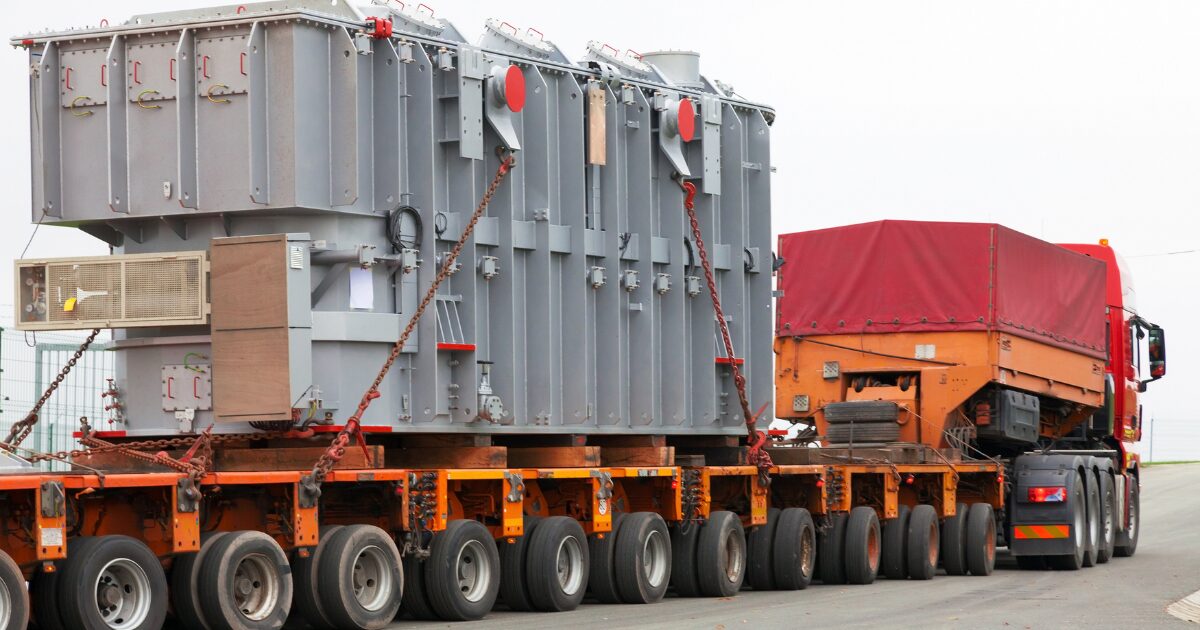
Transporting oversized cargo is one of the most complex areas of logistics. Industrial machinery, wind turbine components, construction equipment, production lines and heavy structures often exceed standard transport dimensions or weight limits. These shipments require special planning, route checks, permits, equipment and coordination across multiple transport modes.
Unlike standard freight, oversized cargo transport cannot rely on a simple booking process. Every detail matters: the cargo dimensions, weight, centre of gravity, loading method, route restrictions, permits, infrastructure limits and final delivery location.
In this article, we explain how oversized goods are transported by road, air and sea, what challenges companies need to consider, and how digital technology is helping logistics providers make project cargo safer, faster and more efficient.
What Is Oversized Cargo?
Oversized cargo refers to goods that exceed the standard legal size or weight limits for regular transport. These shipments may be too long, too wide, too high or too heavy for conventional trucks, containers or cargo handling equipment.
Common examples of oversized cargo include:
- Industrial machinery
- Wind turbine blades and tower sections
- Agricultural equipment
- Construction machinery
- Steel structures
- Factory equipment
- Large tanks and pressure vessels
- Power plant components
- Boats and marine equipment
- Complete production line parts
Because of their size and weight, these goods need tailored logistics planning and often require special permits, escort vehicles, route surveys and heavy-lift equipment.
Why Oversized Cargo Transport Requires Special Planning
Oversized freight creates challenges that standard cargo does not. A shipment may not fit under bridges, through tunnels, around narrow turns or onto regular trailers. It may also require special cranes, reinforced loading areas or temporary road changes.
Before transport begins, logistics teams usually need to check:
- Exact cargo dimensions and weight
- Lifting and securing points
- Road restrictions and bridge capacity
- Tunnel, gate and overhead cable clearance
- Port or airport handling capacity
- Weather risks
- Permit requirements
- Customs documentation
- Loading and unloading equipment
- Final delivery access
The right planning helps prevent delays, unexpected costs and safety risks.
Road Transport for Oversized Cargo
Road transport is one of the most common solutions for oversized cargo, especially for shorter distances or inland delivery. It offers flexibility and can connect factories, warehouses, ports, airports and final project sites.
Special vehicles are often used for oversized road freight, including low-bed trailers, extendable trailers, modular trailers, hydraulic trailers and heavy-duty tractor units. These vehicles allow large and heavy cargo to move safely while reducing height and improving stability.
Key Requirements for Oversized Road Transport
Oversized road transport usually requires careful preparation, including:
- Route planning
- Transport permits
- Escort vehicles
- Police escort in specific cases
- Road surveys
- Bridge and tunnel checks
- Cargo securing plans
- Loading and unloading coordination
- Timing restrictions
In some cases, oversized loads can only move during specific hours or on approved routes. Urban areas, roadworks, weather conditions and traffic restrictions may also affect the schedule.
Route Planning and Site Surveys
Route planning is one of the most important parts of oversized road transport. Logistics teams must check whether the full route can handle the shipment safely.
This may include analysing bridge load limits, road width, roundabouts, sharp turns, traffic signs, overhead cables and restricted zones. For complex shipments, a physical route survey may be necessary before transport.
Digital tools now make this process more accurate. Logistics providers use digital maps, traffic data, drone footage and route simulation software to select safer and more efficient routes.
Air Freight for Oversized Cargo
Air freight is less common for oversized cargo because it is more expensive and has strict technical limitations. However, it can be the best option when speed matters more than cost.
Companies may choose oversized air freight for urgent industrial parts, aircraft components, energy sector equipment or critical machinery. In sectors where downtime creates major financial losses, air cargo can be the fastest and most practical solution.
Large cargo aircraft, such as the Antonov An-124 or Boeing 747-8F, can carry heavy or unusually shaped cargo that cannot fit into standard air freight solutions.
What Makes Oversized Air Freight Complex?
Oversized air cargo requires precise technical planning. The logistics team must calculate the cargo weight, dimensions, centre of gravity, loading method and securing points. The airport must also have the right equipment and infrastructure.
Loading may require:
- Cranes
- Hydraulic lifts
- Roller beds
- Special platforms
- Heavy-duty forklifts
- Custom securing equipment
Airlines and airport handling teams inspect and approve the shipment before departure. Documentation must be accurate, and all technical details must match aviation safety requirements.
When Should Companies Use Air Freight?
Air freight is usually the right choice when:
- The cargo is urgent
- Production downtime must be avoided
- The destination is difficult to reach by road or sea
- A critical spare part needs immediate delivery
- The value of lost time is higher than the transport cost
For example, if a factory line stops because of a missing machine part, air freight may prevent several days of production loss.
Sea Freight for Oversized Cargo
Sea freight is one of the most economical and widely used options for transporting oversized cargo internationally. It is especially suitable for very large, very heavy or non-standard cargo moving across continents.
Ships can carry cargo that would be too large or too costly to move by air. This makes sea freight a strong choice for industrial equipment, heavy machinery, steel structures, engines, generators and complete production line components.
Common Sea Freight Solutions for Oversized Cargo
Depending on the cargo type, oversized sea freight may use:
- Flat rack containers
- Open-top containers
- Breakbulk shipping
- Roll-on/roll-off vessels
- Heavy-lift vessels
- Project cargo vessels
- Special lifting equipment
Flat rack and open-top containers work well for cargo that exceeds standard container dimensions but can still be secured on container equipment. Breakbulk and heavy-lift shipping are used for larger, heavier or irregular cargo that cannot move in containers.
Port Handling and Coordination
Port infrastructure plays a major role in oversized cargo transport. Loading and unloading may require cranes, floating cranes, special trailers, reinforced storage areas and detailed coordination between the shipping line, port operator, customs authority and freight forwarder.
Before shipment, logistics teams need to confirm that both the origin and destination ports can handle the cargo. They also need to prepare the correct documents, including packing lists, insurance papers, customs documents and any required certificates.
Sea freight is slower than air freight, but it is usually the most cost-effective option for large international shipments.
Multimodal Transport for Oversized Goods
Many oversized shipments require more than one transport mode. A cargo may travel by road to a port, by sea to another country, then by road or rail to the final project site.
This is where multimodal logistics becomes essential. Every transport stage must connect smoothly, with the right equipment, timing and documentation.
A multimodal oversized cargo project may include:
- Factory pickup by special trailer
- Road transport to port
- Port handling and customs clearance
- Sea freight
- Destination port unloading
- Road or rail delivery to final site
- On-site unloading coordination
Strong communication between all parties helps avoid delays and keeps the project under control.
Documentation and Permits for Oversized Cargo
Oversized cargo transport often requires more documentation than standard freight. Missing or incorrect paperwork can delay the shipment and create additional costs.
Typical documentation may include:
- Commercial invoice
- Packing list
- Technical cargo drawings
- Weight and dimension details
- Lifting and securing instructions
- Transport permits
- Customs documents
- Insurance documents
- Certificates of origin
- Route permits
- Port handling instructions
For international shipments, customs clearance must also be planned in advance. This is especially important for machinery, industrial equipment and high-value goods.
Main Challenges in Oversized Cargo Transport
Oversized cargo transport can be affected by many practical challenges, including:
- Limited road access
- Bridge and tunnel restrictions
- Weather conditions
- Port congestion
- Permit delays
- Lack of suitable lifting equipment
- Customs documentation issues
- Limited delivery site access
- Coordination between several transport providers
The best way to reduce these risks is to start planning early and work with a logistics partner experienced in project cargo and multimodal freight.
The Future of Oversized Cargo Transport
The future of oversized cargo logistics is becoming more digital, more automated and more sustainable.
Modern logistics providers now use digital route planning, real-time tracking, artificial intelligence-based traffic analysis and digital documentation tools. These technologies help improve accuracy, reduce delays and increase visibility across the full transport chain.
Digital twins and augmented reality are also becoming more relevant in complex logistics planning. They can help simulate routes, loading processes and site conditions before the cargo moves. This reduces the chance of mistakes during transport.
Sustainability is another important direction. Companies are increasingly looking for transport solutions that reduce fuel consumption and emissions. This may include route optimisation, rail freight, more efficient vessels, alternative fuels and better load planning.
How to Prepare for an Oversized Cargo Shipment
Before requesting a quote, companies should collect the key shipment details. This helps the logistics provider assess the cargo correctly and recommend the safest, most efficient solution.
You should prepare:
- Cargo name and description
- Exact length, width and height
- Total weight
- Photos or technical drawings
- Pickup and delivery addresses
- Loading and unloading conditions
- Required delivery date
- Lifting points
- Packaging details
- Customs information
- Any special handling requirements
The more accurate the information, the easier it is to avoid delays and unexpected costs.
Need Support With Oversized Cargo Transport?
Oversized cargo transport requires technical knowledge, strong planning and reliable coordination. From permits and route planning to sea freight, road transport, customs clearance and final delivery, every step must fit together.
Sky-Log supports companies with tailored freight forwarding solutions for complex and non-standard shipments. Our team helps coordinate road, sea, air and multimodal transport with clear communication and personal support from the first quote to final delivery.
If you need to move oversized cargo, contact Sky-Log and we will help you find the safest and most efficient transport solution.